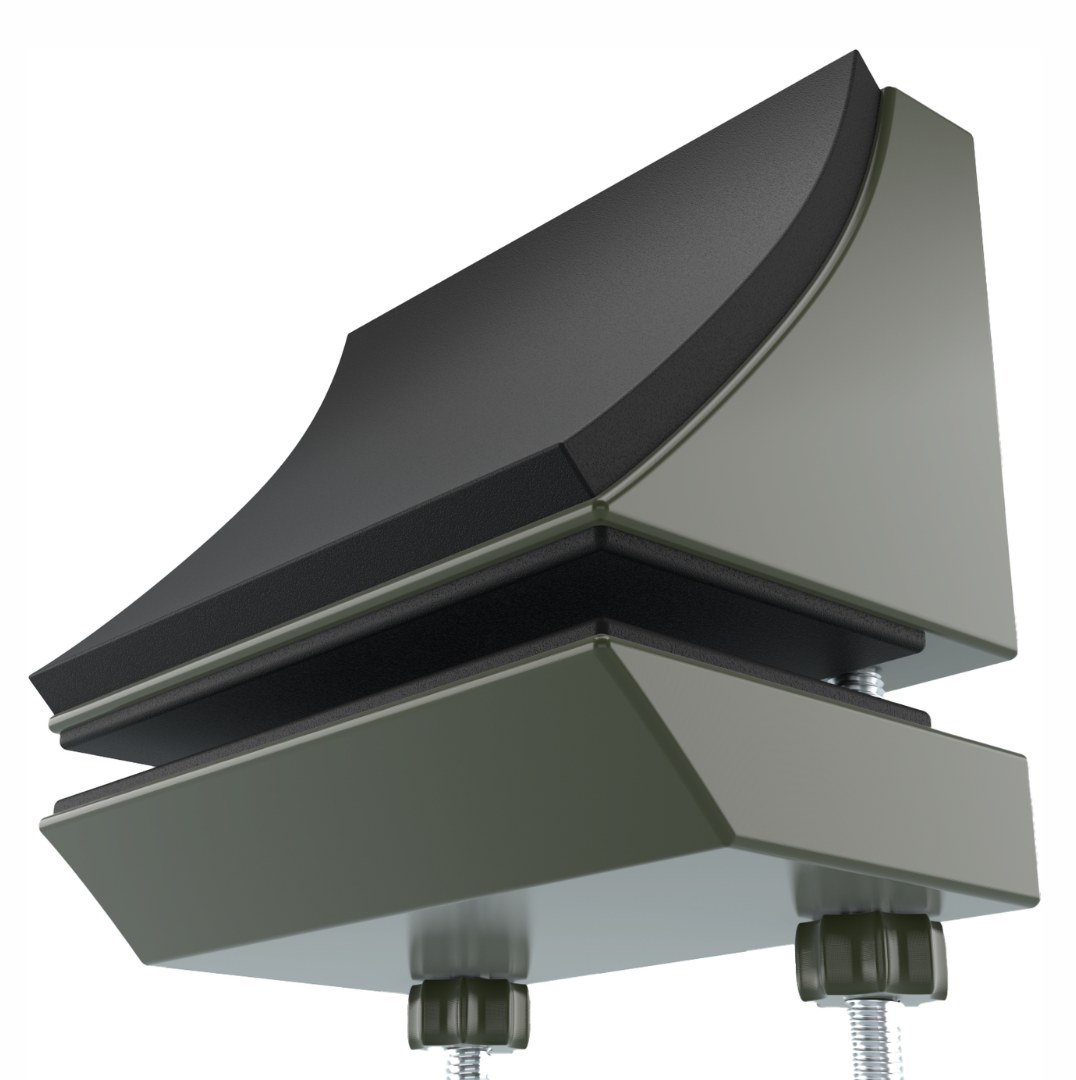
SENIOR DESIGN PROJECT — 01/05
2025–2026ComforClip
Stability Where It's Needed — an adjustable, tool-free clamp that restores stability to hostile or curved public seating.
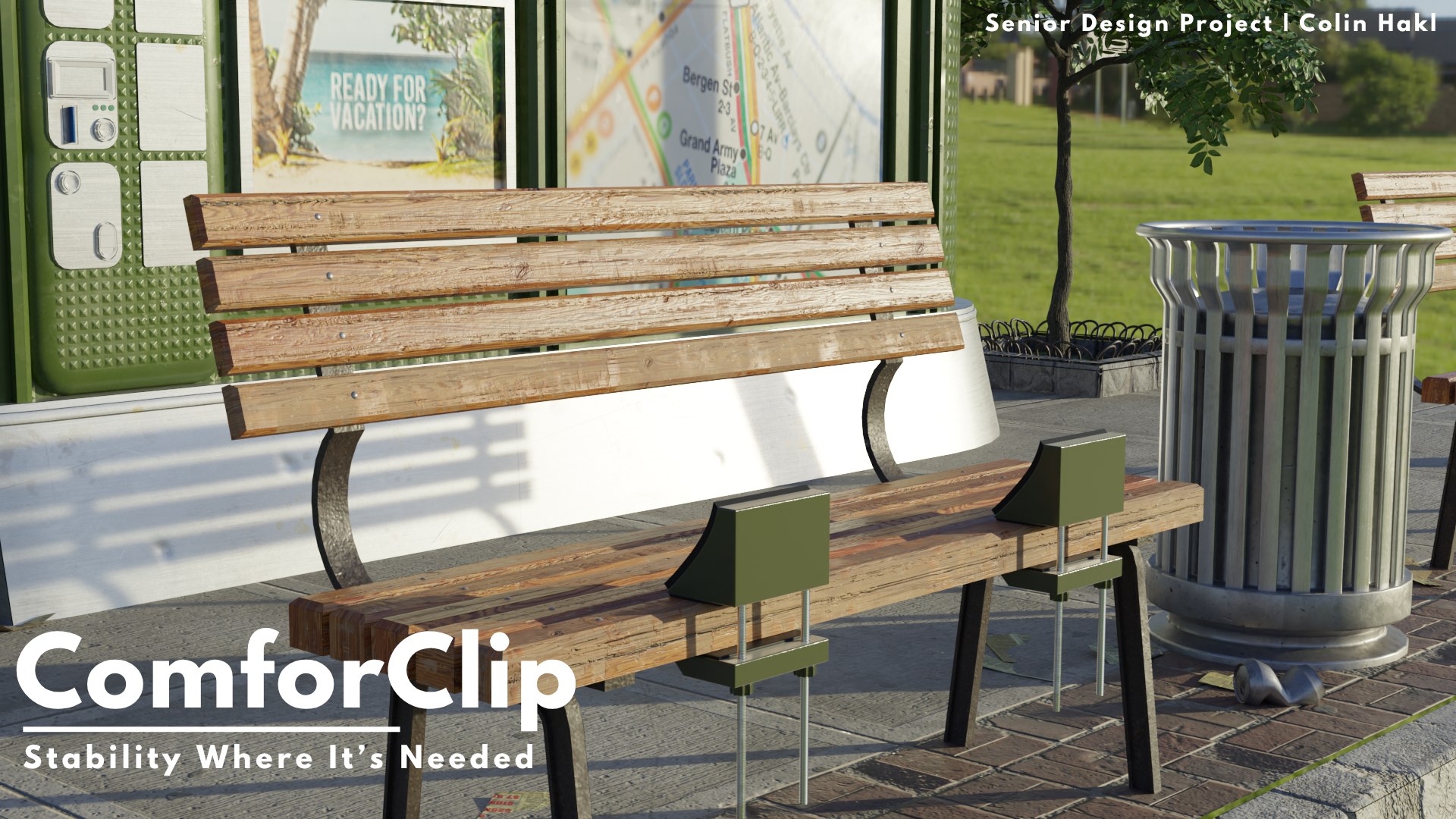
Initial Direction
The project initially explored an anchorable lockbox for secure item storage. Through conversations with the street outreach team at SFCCC, concerns came up around accessibility and limited real-world use. Based on that feedback, the focus shifted away from storage and toward stability and rest, which were identified as more immediate needs in public spaces.
Hostile Architecture
Hostile architecture is often framed as standard urban design, but its effects are anything but neutral. Features like curved benches and slanted seats make it difficult for people without housing to rest safely in public spaces, especially in areas where social services are located. When someone is pushed out of a visible, central space, they do not disappear — they relocate. Over time, this kind of design forces people farther from services and into more isolated places that are often much more dangerous.
Impacts of Hostile Architecture
People often end up living under freeways, overpasses, or in industrial corridors because these are some of the only places left where they are not immediately forced to move. These areas are isolated and heavily polluted — air under freeways contains high levels of exhaust and fine particles, linked to increased risks of cancer and chronic respiratory conditions. When people are pushed out of visible public spaces, they also lose proximity to essential social services.
Existing Responses to Hostile Architecture
Artists and designers have been responding to hostile architecture for decades. Their work exposes the harm caused by exclusionary design and invites the public to reconsider how cities treat unhoused people. Many of these responses, however, are symbolic or intentionally impractical. I wanted to build on this work by developing a solution that keeps the critical intent, but can also be used in real public spaces.
Research + Findings
Research involved evaluating standard public benches to understand common comfort and stability issues. Shallow seat depths and rounded or slanted edges often caused the body to hang off the bench, leading to discomfort and instability. Rather than directly opposing hostile architecture, this project levels the playing field by improving rest on existing public seating.
Design Intent
01 · Easy to Use — no instructions needed, intuitive to operate.
02 · Portable — small and light enough to carry.
03 · Cheap to Produce — accessible material and manufacturing cost.
04 · Simple Assembly — no tools required.
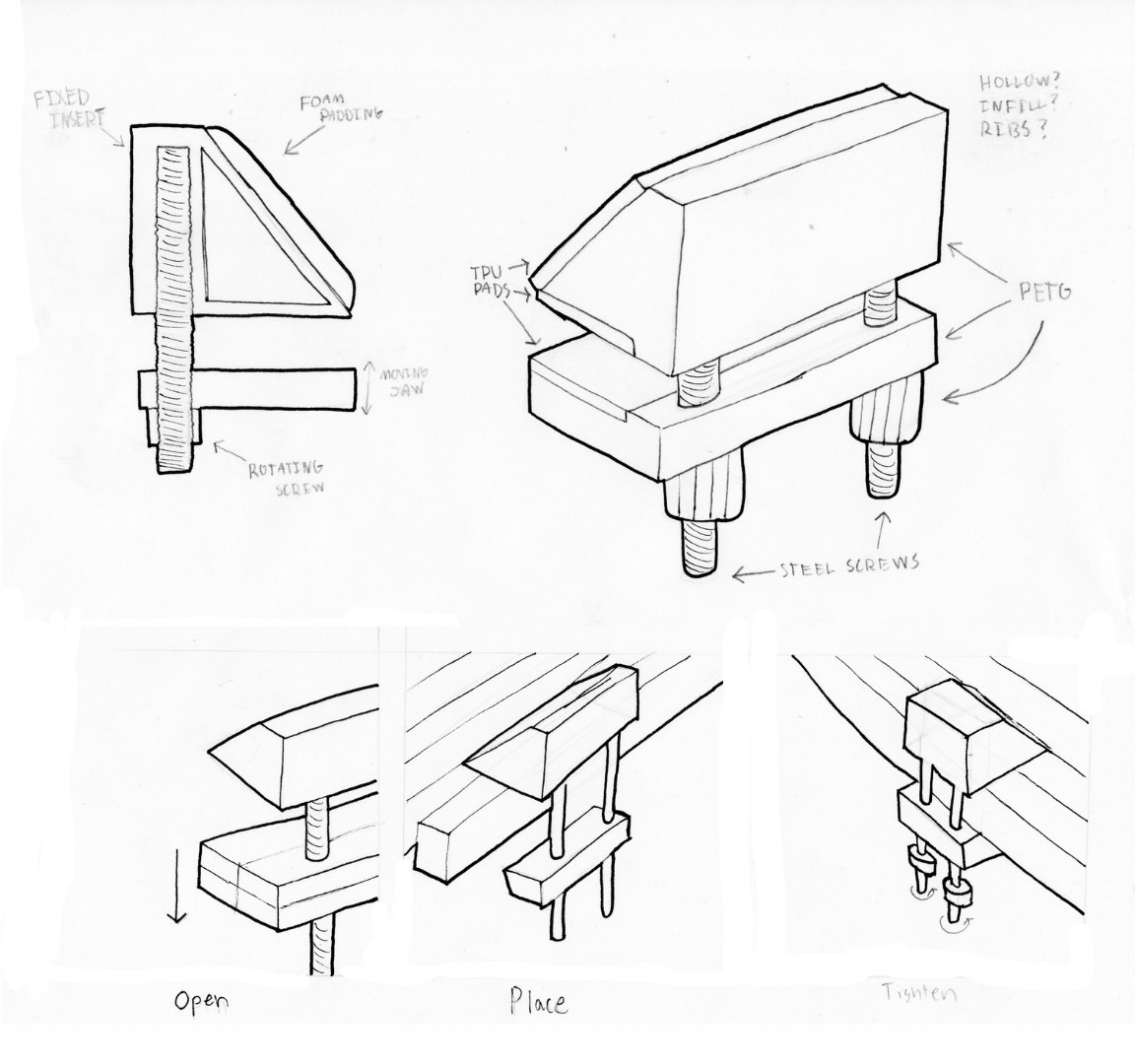
FIG. 7.1 — Early concept exploration before narrowing to the clamp direction
WHO: Unhoused individuals who rely on public seating as a place to rest safely.
WHAT: A portable, tool-free bench attachment that stabilizes curved or hostile seating by preventing unsafe movement during rest.
WHEN: During extended periods in public spaces when rest is necessary and other safe options are unavailable.
WHERE: Public benches and seating in areas where access to services is concentrated.
WHY: Hostile architecture removes safe places to rest, increasing physical risk and pushing people farther from essential services.
HOW: An adjustable clamp made with durable, low-cost materials that creates a stable resting surface without altering existing infrastructure.
Early Sketch Refinement
Early sketching was used to clarify the direction of the project before moving into CAD. These drawings helped define how the clamp would function and how it would be used. Resolving these decisions early allowed the CAD process to focus on refinement rather than exploration.
Mechanisms
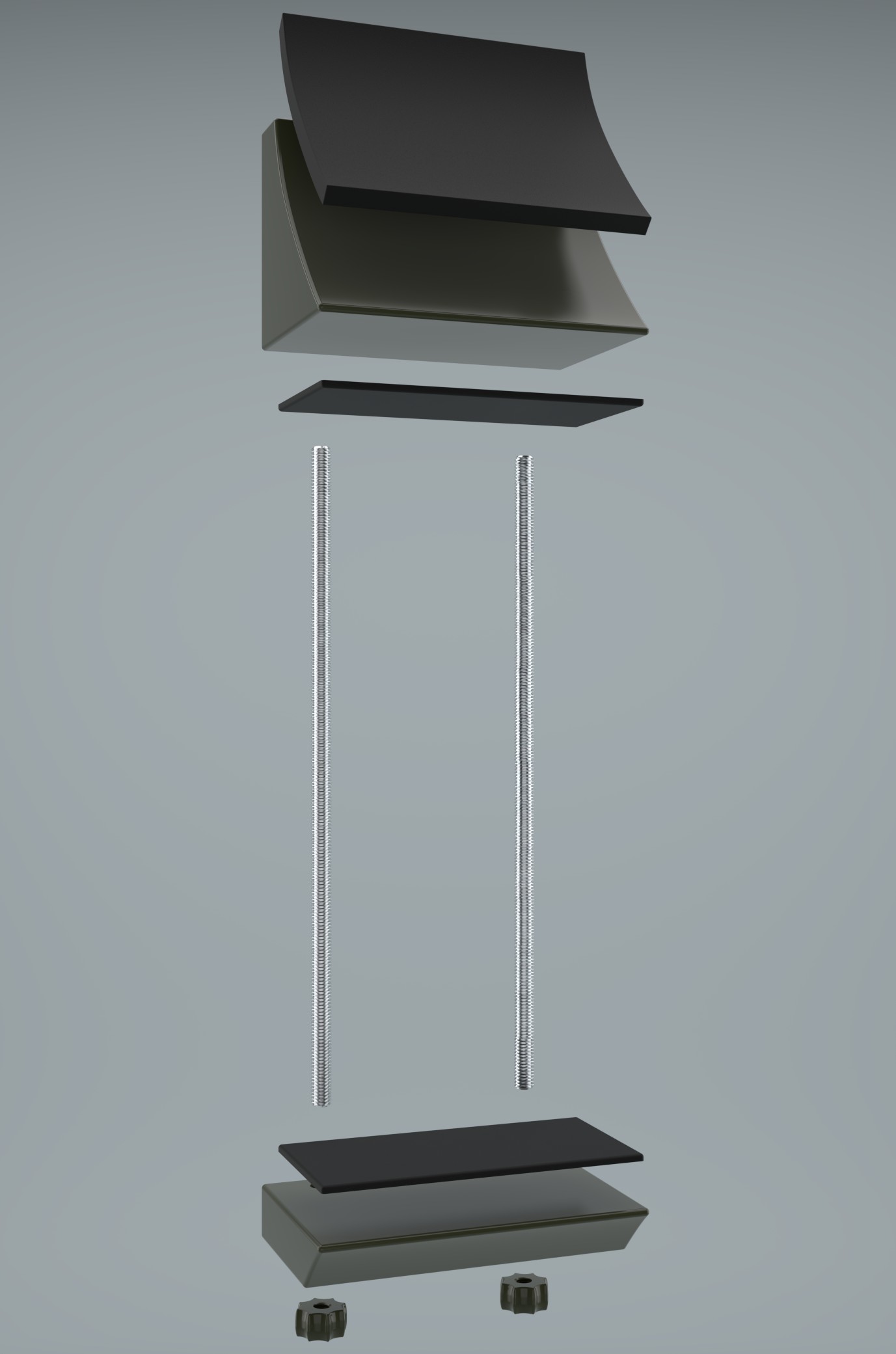
The mechanism uses a dual lead-screw system to apply a controlled clamping force across the moving jaw. Rotating the screws moves the jaw upward in a linear motion while preventing rotation through a dual-point constraint. Friction pads help increase the grip and protect the bench surface, while the cushion creates a more stable and comfortable contact point for the user. This design focused on keeping the mechanism simple and reliable while allowing it to be used without tools.
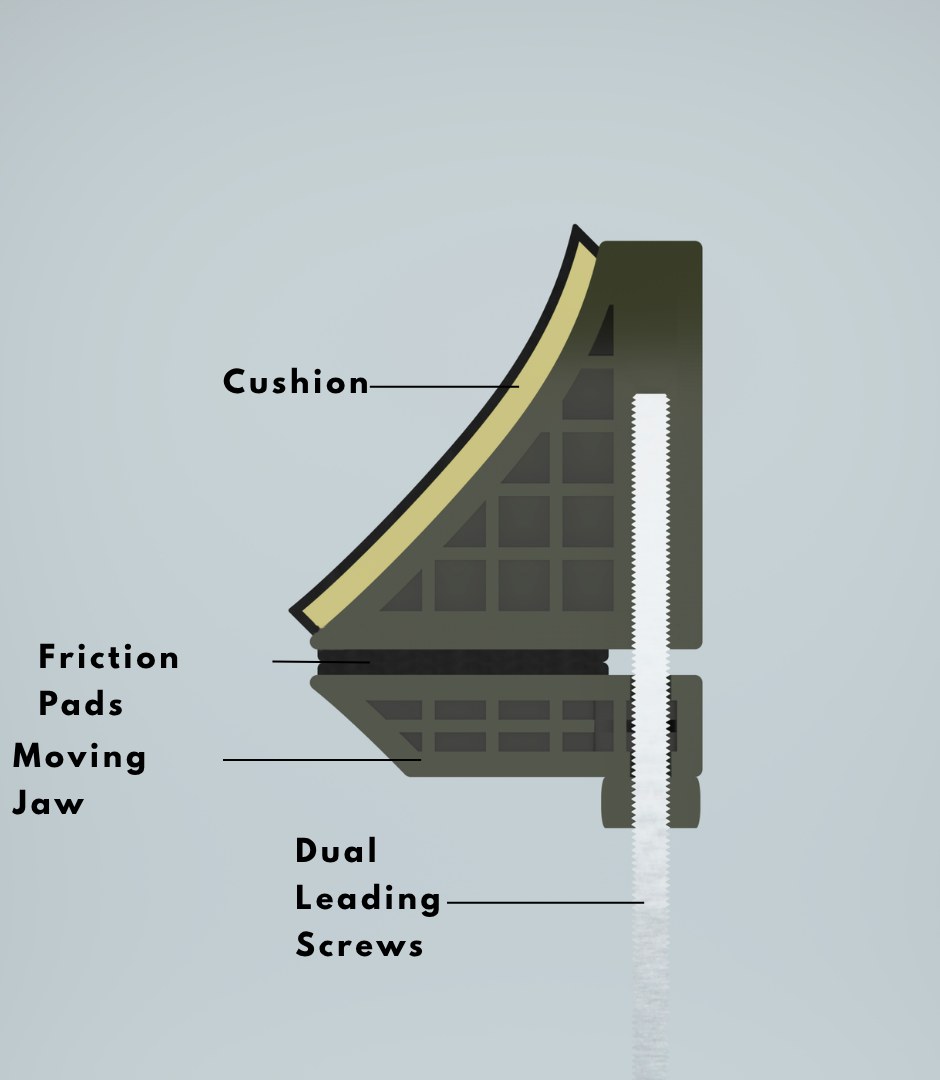
FIG. 10.1 — Cushion, friction pads, moving jaw, and dual leading screws
Materials
Materials were chosen based on how the clamp would be used in real public environments. The body is made from PETG to provide strength and weather resistance, while a standard 3/8"-16 steel screw and hex nut allow for reliable clamping using widely available hardware. TPU pads help improve grip and protect bench surfaces, and a foam cushion adds comfort at the point of contact.
 1
2
3
4
5
1
2
3
4
5
FIG. 11.1 — Full exploded view: cushion, shell, padding, and hardware
Internal Ribbing
A unified rib system increases stiffness while minimizing material use. A solid screw boss reinforces the high-load clamping zones — outer shell, structural ribbing, and screw boss working together to keep the part light without sacrificing strength under repeated clamping.
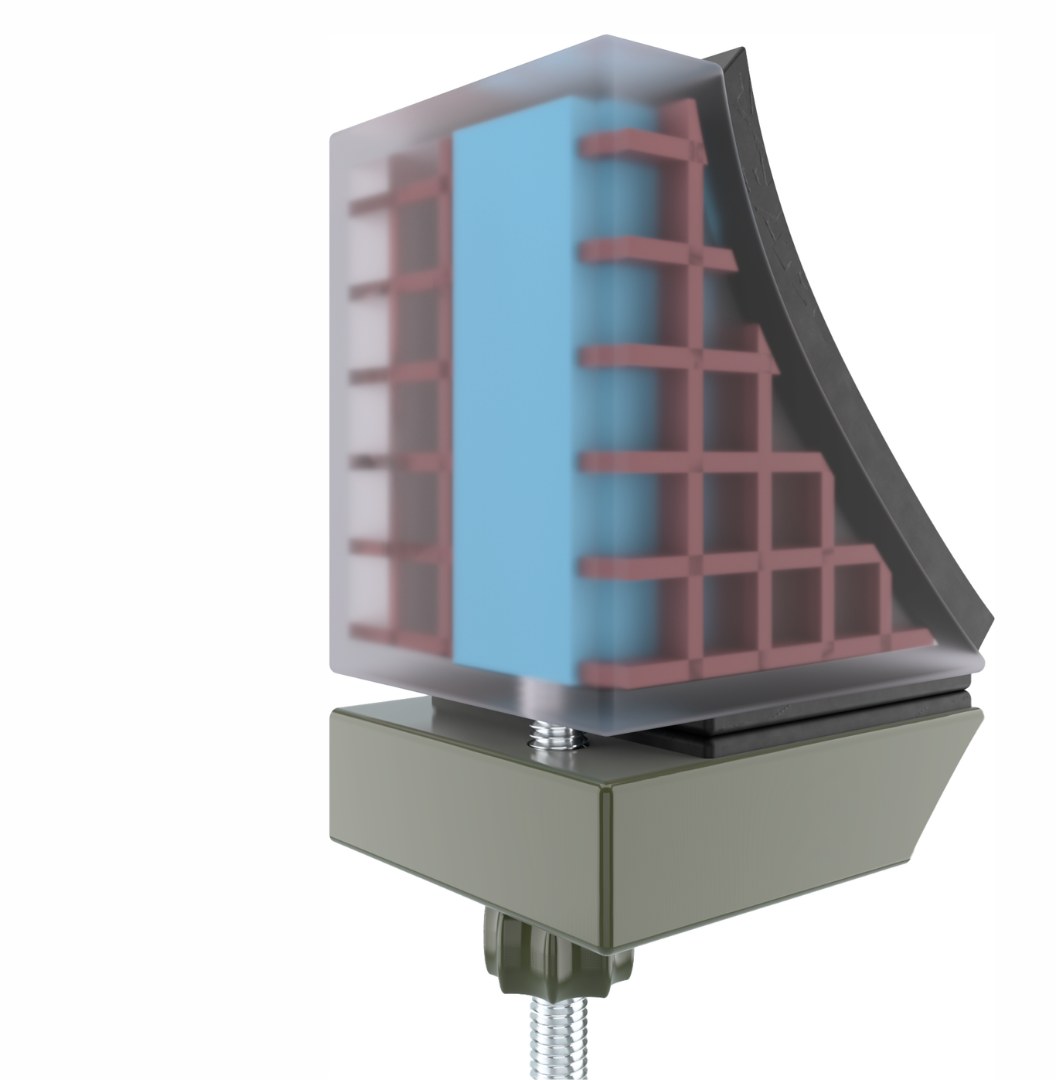
FIG. 12.1 — Outer shell, structural ribbing, and solid screw boss
Size + Fit
The clamp is designed to accommodate different bench thicknesses using an adjustable, screw-driven mechanism. Because it relies on standard threaded hardware, the maximum opening can be easily adjusted by changing the screw length — letting the clamp work across a range of seating conditions without changing the overall form of the design. Opening adjusts up to 8 inches; the jaw closes completely for slim profiles.
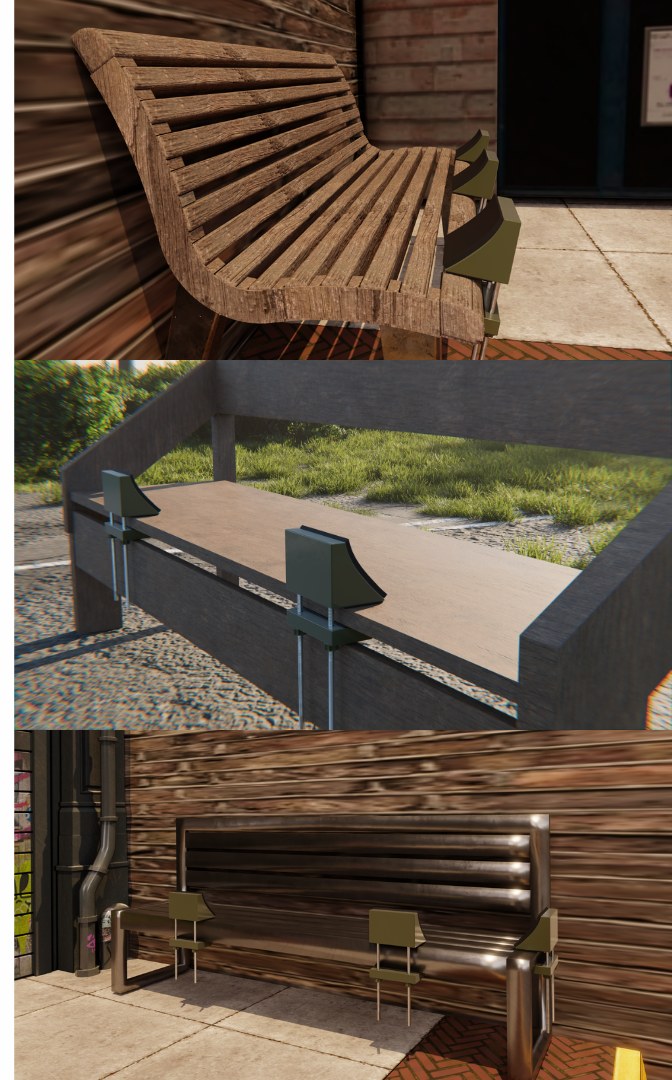
FIG. 13.1 — Fit across wood slat, concrete, and curved seating profiles
Real-World Fit Testing
The clamp was tested on a range of real public seating — wood slat benches, cast iron park benches, concrete ledges, and painted metal seating — to confirm it holds securely across the range of edge profiles and materials actually found in public spaces.
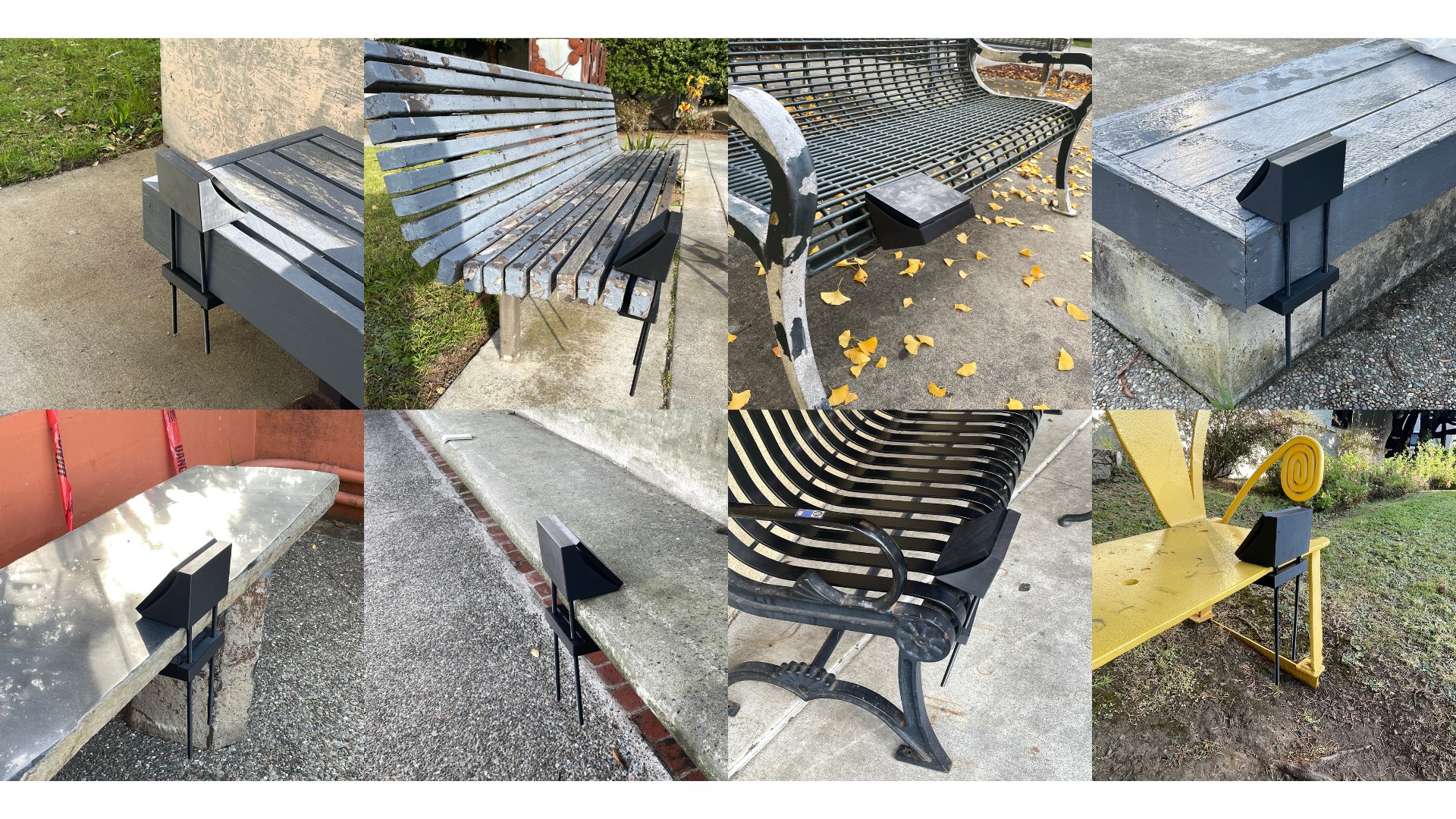
FIG. 14.1 — Fit testing across eight different bench types and materials
Configurability
The design allows for configurability by using standard hardware and a modular geometry. Adjusting the screw length changes the maximum opening, while optional base widths give users the ability to choose between a more compact setup or added stability depending on their situation.
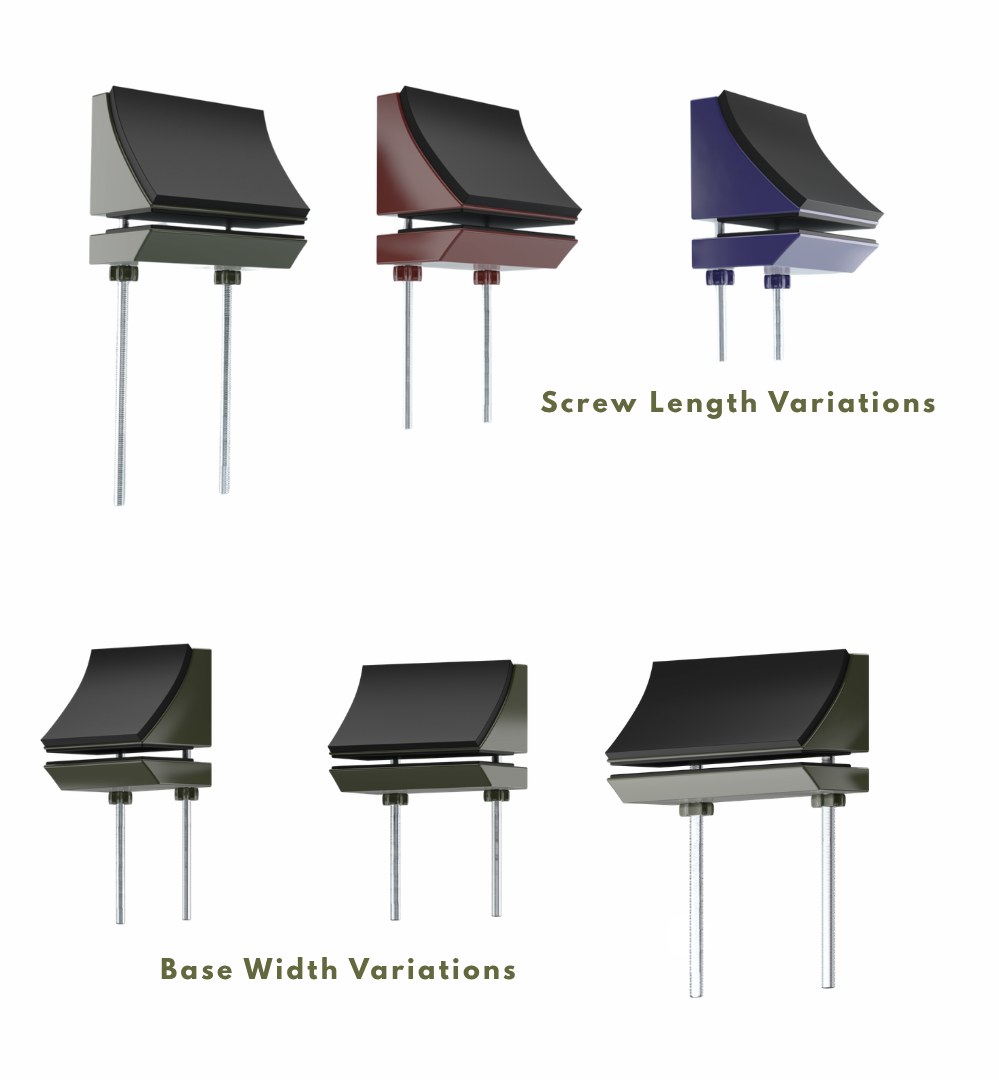
FIG. 15.1 — Screw length variations (top) and base width variations (bottom)
Installation
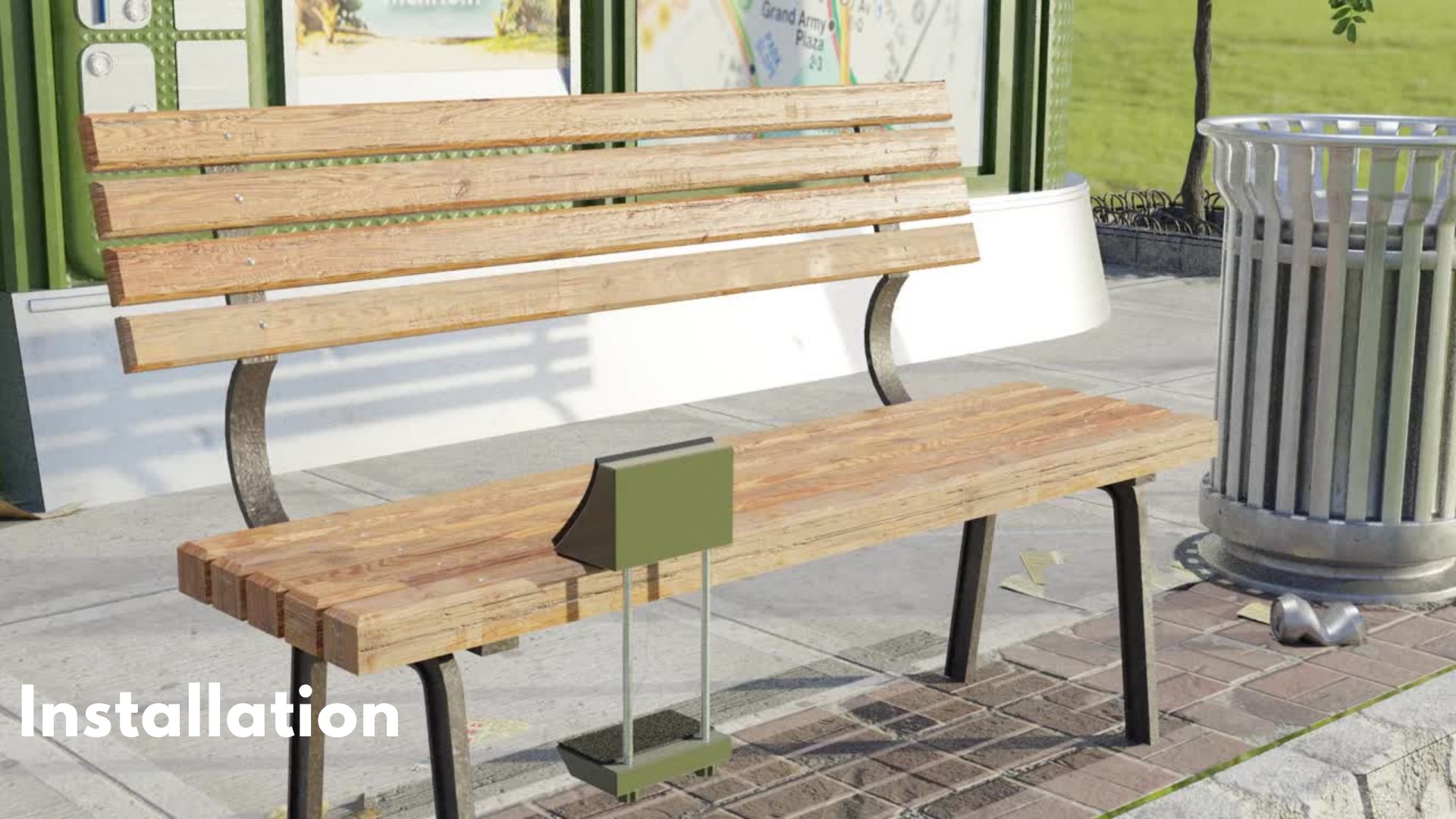
No tools, no permission, no altering the bench itself. The clamp attaches directly to existing public seating and can be removed just as easily, leaving the original structure untouched.
Final Design
ComforClip — Restoring Stability. An adjustable, tool-free clamp for public seating.